
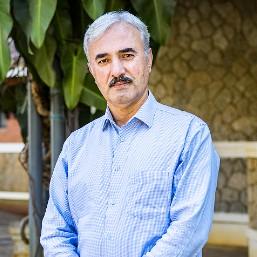
Babar Khan
Agri-ecologist
Kathmandu,Kathmandu
Summary
Strategic professional specializing in scientific research and technical writing, translating evidence into impactful policies and strategies. Experienced in full-cycle program management, emphasizing stakeholder engagement and advisory support. Skilled in community-based conservation and development, managing multiple priorities effectively. Strong communicator in English and basic Chinese, demonstrating leadership and team-building capabilities.
Overview
24
24
years of professional experience
Work History
Regional Lead [Strategic Group 3: Regional Action and Global Advocacy]
International Centre for Integrated Mountain Development (ICIMOD)
Kathmandu
07.2023 - Current
- Provided strategic leadership in science–policy–finance dialogue to address transboundary challenges, promote sustainable ecosystem services, and advance resilient and inclusive development pathways for HKH region.
- Led establishment and facilitation of high-level institutional platforms—HKH High-Level Task Force, HKH Ministerial Mountain Summit, HKH Parliamentarians Forum, and thematic working groups—to enhance policy dialogue, collaboration, and collective commitment among member countries.
- I spearhead initiatives that strengthen regional cooperation and coordinated action across the Hindu Kush Himalaya (HKH) region.
- Oversaw regional thematic assessments to co-generate and disseminate scientific knowledge and credible evidence that informed national and regional policy processes.
- Www.icimod.org
Senior Ecosystem Management Specialist
International Centre for Integrated Mountain Development (ICIMOD)
Kathmandu
08.2020 - 06.2023
- I provided strategic leadership and technical expertise for the conservation, management, and sustainable use of mountain ecosystems across the Hindu Kush Himalaya (HKH) region.
- Led regional cooperation initiatives, securing global recognition and international support for HKH region through science-informed policy engagement and strategic partnerships.
- Developed and applied research tools and methodologies to illustrate benefits of sustainable natural resource management, including food security, greenhouse gas reduction, climate change adaptation, gender equality, social inclusion, and economic development.
- Guided programme teams on transboundary landscapes and river basins, enhancing collaboration on cryosphere and regional cooperation initiatives.
- Www.icimod.org
Director (Sindh and Balochistan region)
World Wide Fund for Nature Pakistan
Karachi
08.2017 - 07.2020
- Oversaw technical, administrative, and financial operations of marine and terrestrial projects in Sindh-Balochistan region, supervised 150+ staff.
Senior Conservation Manager / Head Gilgit-Baltistan Region (Pakistan)
World Wide Fund for Nature Pakistan
Gilgit
01.2007 - 07.2017
- Managed technical, financial, and administrative operations of Gilgit-Baltistan provincial conservation programme. Developed concepts and proposals, hired and trained staff, and planned programmes.
National Coordinator for Environmental Education Programme
World Wide Fund for Nature Pakistan
Islamabad
01.2004 - 12.2006
- Coordinated and evaluated EE projects across the country, ensuring effective implementation and comprehensive reporting.
Environmental Education Officer
Mountain Area Conservancy Project (MACP) WWF/IUCN
Nanagparbat Conservancy (Skardu and Astore valleys of NAs)
12.2001 - 12.2003
- Coordinated GEF/UNDP Mountain Area Conservancy project (Education & Awareness) and EU-funded EEP to enhance environmental education in Skardu & Astore valleys, contributing to community awareness and conservation efforts.
Education
PhD - Ecology
Graduate University of The Chinese Academy of Sciences
Beijing, P.R China08-2012
M.Sc (Hon) - Soil & Environmental Science
NWFP Agricultural University
Peshawar, Pakistan01.2001
Skills
- Scientific and policy writing
- Strategic planning
- Program management
- Research methodologies
- Scientific assessment
- Ecosystem management
- Stakeholder engagement
- Science diplomacy
- Partnership development
- Regional cooperation and collaboration
Personal Information
- Date of Birth: 11/14/75
- Gender: Male
- Marital Status: Married
Publications
- Ghost economy: The forbidden trade of the Himalayas, Babar Khan, Kesang Wangchuk, 2026, Global Ecology and Conservation, 65, https://doi.org/10.1016/j.gecco.2025.e04045
- Assessment of Habitat Suitability and Identification of Conservation Priority Areas for Endangered Marco Polo Sheep Throughout Khunjerab National Park (Pakistan) and Tashkurgan Natural Reserve (China), Karim, I., Xiaodong, L., Khan, B., Kazmi, T., 2025, Animals, 15, 1907, https://doi.org/10.3390/ani15131907
- Co-Management of Rangelands, Dorji, T., Khan, B., Gurung, J., Ismail, M., Rijal, S.J., Shaoliang, Y., Qamar, F.M., 2023, Resilient Mountain Solutions, Agarwal, N., ICIMOD, Kathmandu, 120+
- An Introduction to Hindu Kush-Karakoram-Himalayan (HKH) Mountain Ranges in Pakistan, Babar Khan, Muhammad Zafar Khan, 2022, Mountain Studies: Understanding and Managing Mountains for People and Nature, Khan, M. Z., Karakoram International University, Gilgit, Pakistan, VII+206
- Migration, Remittances and Climate Resilience: Do Financial Literacy and Disaster Risk Reduction Orientation Help to Improve Adaptive Capacity in Pakistan, Amjad Ali, Muhammad Zafar Khan, Babar Khan, Ghulam Ali, 2022, GeoJournal, https://doi.org/10.1007/s10708-022-10631-6
- Setting the net lower: A potential low-cost mitigation method to reduce cetacean bycatch in drift gillnet fisheries, Kiszka J J, Moazzam M, Boussarie G, Shahid U, Khan B, Nawaz R, 2021, Aquatic Conserv: Mar Freshw Ecosyst, 1–9, https://doi.org/10.1002/aqc.3706
- Factors shaping economics of land use change in Gilgit-Baltistan, Pakistan, Amjad Ali, Ghulam Ali, Ghulam Muhammad Shah, Attaullah Shah, Rehmat Karim, Srijana Joshi, Karamat Ali, Babar Khan, 2021, GeoJournal, https://doi.org/10.1007/s10708-021-10478-3
- Community-based trophy hunting programs secure biodiversity and livelihoods: Learnings from Asia’s high mountain communities and landscapes, Adhikari L, Khan B, Joshi S, Ruijun L, Ali G, Shah GM, Ismail M, Bano K, Ali R, Khan G, Pasakhala B, Ali A, 2021, Environmental Challenges, 4, 100175, https://doi.org/10.1016/j.envc.2021.100175
- On the influence of demographic structure and industrial growth on environmental quality, Khan A, Siclen L, Khan B, Salman N, 2021, Journal of environmental management, 288, 112453, https://doi.org/10.1016/j.jenvman.2021.112453
- The story behind why Gilgit-Baltistan allows trophy hunting - A historical account of an unconventional arrangement in GB to allow trophy hunting to conserve wildlife, Babar Khan, Syed Muhammad Abubakar, Kundan Shrestha, 2021, The Express Tribune, 03/29/21, https://tribune.com.pk/article/97338/
- Pakistan, Muhammad Moazzam Khan, Rab Nawaz, Babar Khan, 2020, Sea Turtles in the Middle East and South Asia Region: MTSG Annual Regional Report 2020, Phillott, A.D., Rees, A.F., 177-198
- Renewable energy solutions for better health and energy security in Karachi, Pakistan, Babar Khan, Hamera Ayesha, 2020, Nature in All Goals - How nature-based solutions can help us achieve all the sustainable development goals, Marion A. Osieyo, WWF UK, 8, https://wwfeu.awsassets.panda.org/downloads/nature_in_all_goals_2020.pdf
- Status of tropical tuna fisheries of Pakistan especially impact of subsurface gillnetting on their landings, Muhammad Moazzam, Saba Ayub, Umair Shahid, Rab Nawaz, Babar Khan, 2019, IOTC-2019-WPTT21-16
- Local knowledge-based perceptions on climate change and its impacts in the Rakaposhi valley of Gilgit-Baltistan, Pakistan, Erica Udas, Laxmi Dutt Bhatta, Babar Khan, Anila Ajmal, Roheela Amir, Sunita Ranabhat, 2019, International Journal of Climate Change Strategies and Management, 10.1108/IJCCSM-05-2019-0024
- Predicting the potential impacts of trophy hunting on population structure of Himalayan ibex (Capra sibirica) in Northern Pakistan, Muhammad Zafar KHAN, Farida BEGUM, Muhammad RIAZ, Babar KHAN, Rehmat KARIM, Karamat ALI, Safina AMAN, 2019, Pol. J. Ecol., 67, 264-270
- Introducing renewable energy solutions for better health and energy security in Karachi, Pakistan, Hamera Ayesha, Babar Khan, 2019, Nature in All Goals - How nature-based solutions can help us achieve all the sustainable development goals, Marion A. Osieyo, WWF UK, 5, https://wwf.panda.org/our_work/governance/?349332/Nature-and-the-SDGs
- Junipers of Ziarat – a living heritage for humanity, Khan B, Khel Yahya M, 2019, CEiBa Newsletter, 2, 3, 09-12
- Himalayan High-Altitude Wetlands: An Ecosystem beyond Habitats for Waterfowls – Experiences and Lessons from Northern Mountainous Areas of Pakistan, Babar Khan, Farasat Ali, Fazal Karim, 2018, Wetlands in the Himalaya: Securing services for livelihoods, Bhatta, L.D., Wu, N., Udas, E., Agrawal, N.K., Ranabhat, S., Basnet, D., ICIMOD, Kathmandu
- Livestock depredation by large predators and its implications for conservation and livelihoods in the Karakoram Mountains of Pakistan, Muhammad Zafar, Babar Khan, Muhammad Saeed Awan, Farida Begum, 2017, Oryx, Fauna & Flora International, 1-7, https://doi.org/10.1017/S0030605316001095
- Indigenous Practices of Yak Breeding in Gilgit-Baltistan: Current status and future prospects for transboundary yak husbandry in the Karakoram-Pamir mountain area, Babar Khan, Muhammad Zafar Khan, Saeed Abbas, Garee Khan, Sumaira Baig, Shoukat Jamal, 2016, Yak on the move: Transboundary challenges and opportunities for yak raising in a changing Hindu Kush Himalayan region, Wu, N, Yi, S, Joshi, S, Bisht, N., ICIMOD, 167-180
- Himalayan Ibex (Capra ibex sibirica) habitat suitability and range resource dynamics in the Central Karakorum National Park, Pakistan, G. Khan, B. Khan, F.M. Qamer, S. Abbas, A. Khan, C. Xi, 2016, Journal of King Saud University – Science, http://dx.doi.org/10.1016/j.jksus.2016.04.006
- Altitudinal gradients of soil and vegetation carbon and nitrogen in a high altitude Nature Reserve of Karakoram Range, Shedayi A A, Xu M, Naseer I, Khan B, 2016, SpringerPlus, 5, 320, 10.1186/s40064-016-1935-9
- Exploring the Socio-Ecological Characteristics of Gahkuch Marshland: A Unique Wetlands Ecosystem in Hindukush Mountain Ranges, Yawar Abbas, Babar Khan, Farasat Ali, Garee Khan, Syed Naeem Abbas, Rizwan Karim, Saeed Abbas, Nawazish Ali, Ejaz Hussain, 2015, Journal of Water Resources and Ocean Science, 4, 6, 92-99, 10.11648/j.wros.20150406.13
- Allelopathic effects of bark, leaf and root exduate of Guaiacum Officinale (Lignum) on seed germination, root length, shoot length, dry weight of Pennisetum Glauccum (Millet), Karim Akbar, Babar Khan, Shahid Shoukat, Waqar Ahmed, Yawar Abbas, Rizwan Karim, Khurram Shehzad, Farasat Ali, 2015, Journal of Biodiversity and Environmental Sciences, 7, 6, 141-147
- Seabuckthorn: an ecosystem based adaptation strategy for arid mountain areas, Khan B, Jasra A W, Ali Hassan, 2015, Proceedings of 7th ISA international Conference on Seabuckthorn – Emerging technologies for health protection and environmental conservation, November 24-26, 2015, New Dehli, India, 8-9
- Chinese Pond Heron Ardeola bacchus: an addition to the avifauna of Pakistan, Khan B, Hussain E, Mundkur T, Abbas S, Khan G, 2015, BIRDING ASIA, 24, Country Firsts, 136-143
- A Survey of Ethno botanically important plants of District Ghizer, Gilgit-Baltistan (Pakistan), Jabeen N, Ajaib M, Siddiqui M F, Ulfat M, Khan B, 2015, FUUAST J. BIOL., 5, 1, 153-160
- Abundance, distribution and conservation status of Siberian ibex, Marco Polo and Blue sheep in Karakoram-Pamir mountain area, Khan B, Ablimit A, Khan G, Jasra A W, Ali H, Ali R, Ahmad E, Ismail M, 2015, Journal of King Saud University – Science, http://dx.doi.org/10.1016/j.jksus.2015.02.007
- Status and threats of Asiatic Black bear in Gais valley Diamer district, Gilgit-Baltistan, Pakistan, Ali R, Khan B, Khan G, Khan M Z, Abbas S, Rais U, 2015, International Journal of Scientific and Research Publications, 5, 3, 1-8, 2250-3153
- Pakistan’s first community power company lights up Hunza valley, Mehjabeen Abidi Habib, Humaira Khan, Babar Khan, 2015, The thirdpole.net, February 18, 2015, http://www.thethirdpole.net/pakistans-first-community-power-company-lights-up-hunza-valley
- Understanding the Transboundary Karakoram-Pamir Landscape, Ning, W, Ismail, M, Joshi, S, Qamar, FM, Phuntsho, K, Weikang, Y, Khan, B, Shaoliang, Y, Kotru, R, Sharma, E, 2014, ICIMOD, 52
- Pastoralist experience and tolerance of snow leopard, wolf and lynx predation in Karakoram Pamir Mountains, Khan B, Ablimit A, Nawaz MA, Ali R, Khan MZ, Din J, Karim R, 2014, J. Bio. & Env. Sci., 5, 4, 214-229
- Abundance, distribution and conservation of key ungulate species in Hindu Kush, Karakoram and Western Himalayan (HKH) mountain ranges of Pakistan, Khan, M.Z., Khan, B., E. Ahmad, M.Z. Khan, G. Khan, A. Ajmal, R. Ali, S. Abbas, M. Ali, 2014, Int. J. Agric. Biol., 16, 1050–1058
- Population structure and grouping tendency of Asiatic ibex Capra sibirica in the Central Karakoram National Park, Pakistan, Khan M Z, Awan MS, Bocci A, Khan B, Syed YA, Khan G, Abbas S, 2014, J. Bio & Env. Sci., 5, 2, 542-554
- Indigenous and cross breeds of Yak in Gilgit-Baltistan – current status and future prospects of trans-boundary yak husbandry in Karakoram Pamir mountain areas, Babar Khan, Muhammad Zafar Khan, Saeed Abbas, 2014, Proceedings of the fifth international conference on Yak, 27-30 August 2014, Lanzhou, China, 51-52
- Cape hare: a vital component of alpine ecosystem, Babar Khan, Muhammad Ali, 2014, NATURA, 38, 1, 15-18
- Baseline Study of Vegetation in Doyan Valley District Astore, Gilgit-Baltistan, Pakistan, Ali R, Khan B, Ali A, Khan M Z, Khan G, Abbas S, Hussain E, Ali M, 2014, IJETST, 1, 1, 7-19
- Avian diversity in central Karakoram National Park, Gilgit-Baltistan, Abbas, S., R. Tabassum, M.Z. Khan, B. Khan, S. Hussain, G. Khan, S. Awan, 2014, Int. J. Agric. Biol., 16, 377‒382
International Exposure
- International Visitors Leadership Programme (IVLP), United States, 06/18/05, 07/15/05, Visited US apex environmental agencies like EPA, Bureau of Land Management, US State Department, Woodrow Wilson International Research Center, Smithsonian, International Water and Boundary Commission, New England University, Organic Growers Association, Chewonki Center of Environmental Education, Murie Education and Research Center, Teton Science School, Yellow Stone, Grand Teton, Shenandoah, and Rock Creek National Parks, Lury Caverns, Carlsbad Caverns, National Elk Refuge and White sands, met with government and private officials, exchanged views on bilateral environmental issues and discussed various options of future collaboration for environmental improvement and rehabilitation in the two countries.
- International workshop on Introductory cum Programme Standards & Fundraising Course, Glands, Switzerland, 05/20/07, 06/05/07
- Regional programme planning workshop on Saving Wetlands Sky high, Kathmandu, Nepal, 01/28/08, 02/03/08
- Regional workshop on GLOF Risk Reduction, Paro, Bhutan, 01/20/09, 01/22/09
- Regional workshop on Pastoralism and rangelands management in mountain areas, Khorog, Tajikistan; Murghab & Sary Tash, Kyrgyzstan; Kashigar, China, 07/14/10, 07/21/10
- International conference on Programme development, Zeist, NL, 10/04/10, 10/08/10
- Fifth International Conference on Yak, Lanzhou, China, 08/28/14, 08/30/14
- International Conference on Mountain People Adapting to Change, Kathmandu, Nepal, 11/09/14, 11/12/14
- The 2nd Civil Society Meeting on Climate Change, Disasters and Human Mobility in South Asia, Kathmandu, Nepal, 02/02/15, 02/03/15
- International Conference on Eco-tourism and conservation, Nay Pyi Taw, Myanmar, 05/19/15, 05/21/15
- Regional Expert Consultative Symposium on Managing Wetland Ecosystem, Dali, Yunnan, China, 08/25/15, 08/27/15
- International conference on Climate and environment change impact on the Indus basin waters, ICIMOD Headquarters, Kathmandu, Nepal, 02/17/16, 02/18/16
- Regional workshop on Snow Leopard Species Action Plan 2016, Pokhara, Nepal, 05/23/16, 05/25/16
- The 3rd regional experience sharing and learning workshop of the Asia High Mountain Project, Bangkok, Thailand, 02/20/17, 02/25/17
Specialization
- PhD, Ecology
- MSc Hon, Soil & Environmental Sciences
Timeline
Regional Lead [Strategic Group 3: Regional Action and Global Advocacy]
International Centre for Integrated Mountain Development (ICIMOD)
07.2023 - Current
Senior Ecosystem Management Specialist
International Centre for Integrated Mountain Development (ICIMOD)
08.2020 - 06.2023
Director (Sindh and Balochistan region)
World Wide Fund for Nature Pakistan
08.2017 - 07.2020
Senior Conservation Manager / Head Gilgit-Baltistan Region (Pakistan)
World Wide Fund for Nature Pakistan
01.2007 - 07.2017
National Coordinator for Environmental Education Programme
World Wide Fund for Nature Pakistan
01.2004 - 12.2006
Environmental Education Officer
Mountain Area Conservancy Project (MACP) WWF/IUCN
12.2001 - 12.2003
PhD - Ecology
Graduate University of The Chinese Academy of Sciences
M.Sc (Hon) - Soil & Environmental Science
NWFP Agricultural University